
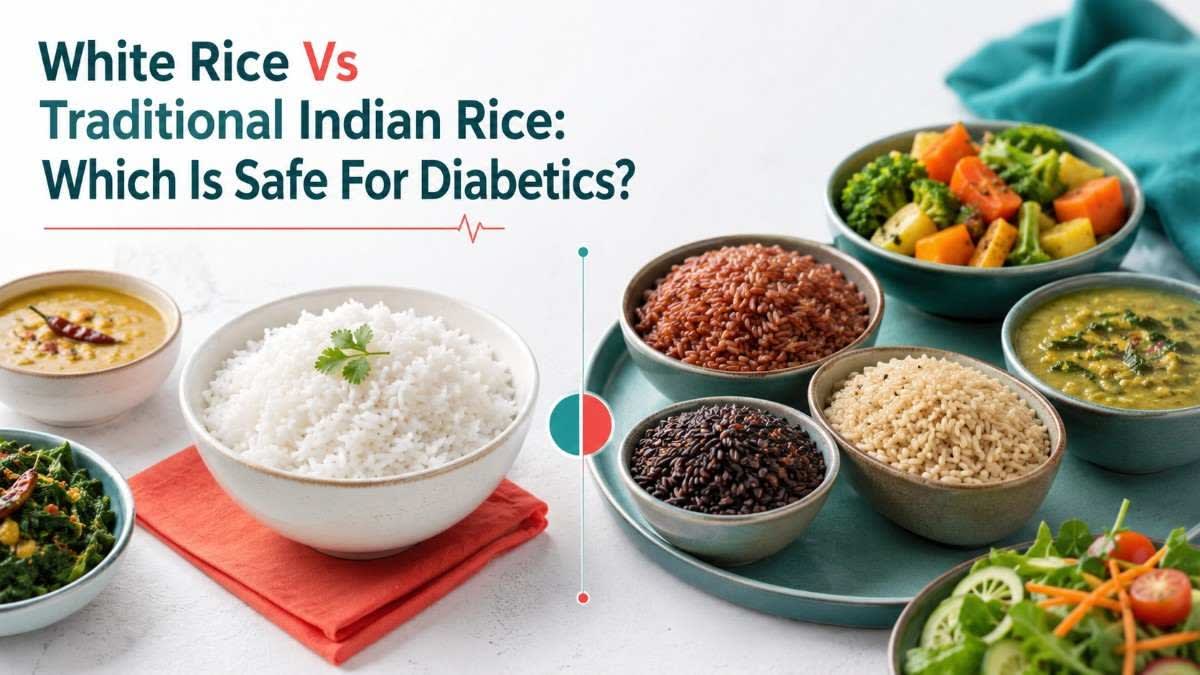
Ever wondered why your sugar reading looks fine before lunch and climbs steadily an hour after a plate of rice? You're not doing anything wrong. Rice, especially the polished white kind most of us grew up eating, behaves differently in the body than we're usually told.
Rice is on almost every Indian plate, and it's also one of the first things people are told to cut the moment diabetes enters the conversation. But is rice and diabetes really that black and white? Not quite. The research points to something more useful than "avoid rice." It points to which rice, how much, and what it's eaten with.
Not all rice is the same food
Lumping every kind of rice into one category is where most of the confusion starts. White rice, brown rice, and India's older, regional rice varieties are not nutritionally interchangeable, even though they all get called by the same name. The differences in their fibre content and processing are exactly what decide whether a bowl of rice sits quietly in your system or sends your sugar climbing.
Why does white rice raise blood sugar so quickly?
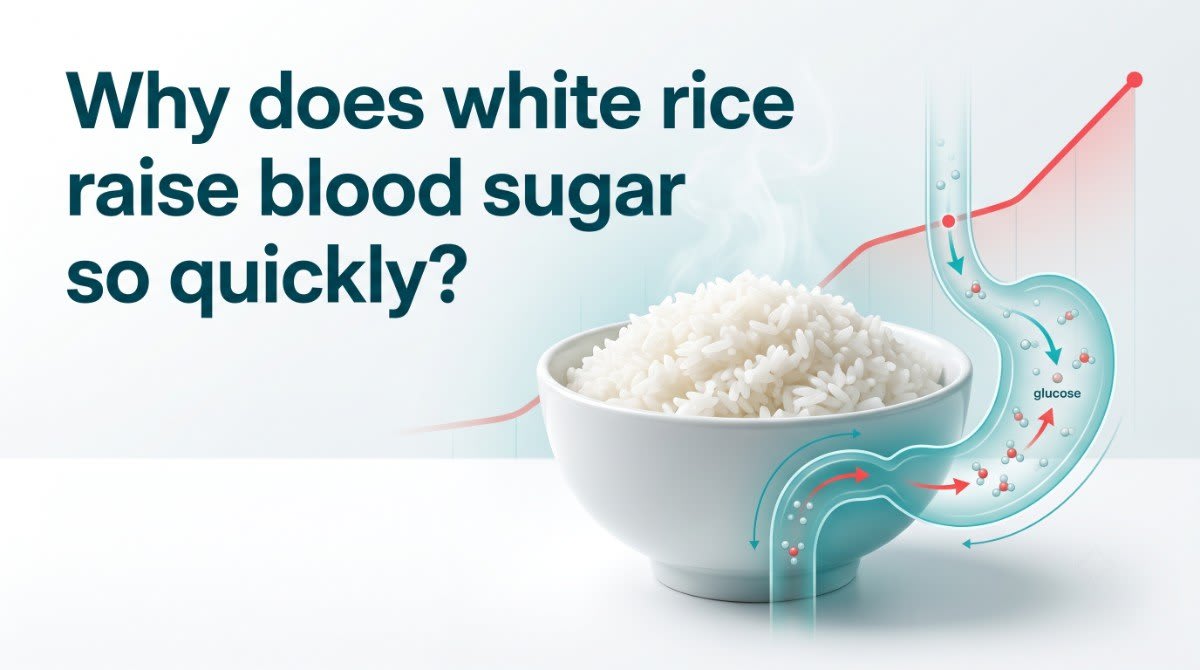
White rice doesn't start out white. It begins as brown rice, complete with its bran layer and germ. Milling strips both away, leaving behind mostly starch. That starch breaks down fast once it hits your gut, which is why white rice tends to push blood sugar up harder and faster than whole grains do.
A comprehensive review published in the Romanian Journal of Diabetes, Nutrition and Metabolic Diseases (2021) looked across multiple population studies, including groups followed in the US and Japan, and found a consistent pattern: higher white rice intake tracked with higher type 2 diabetes rates. One of the analyses cited in that review found people eating more than five servings of white rice a month carried a statistically significant 17 percent higher diabetes rate than those eating less than one serving a month.
The reason isn't complicated once you know what's missing. The same review notes that white rice contains roughly five times less fibre than brown rice, because milling removes the bran that carries most of it. Less fibre means the starch gets digested faster, and faster digestion means a sharper, quicker rise in blood glucose.
What the glycemic index of rice actually tells you
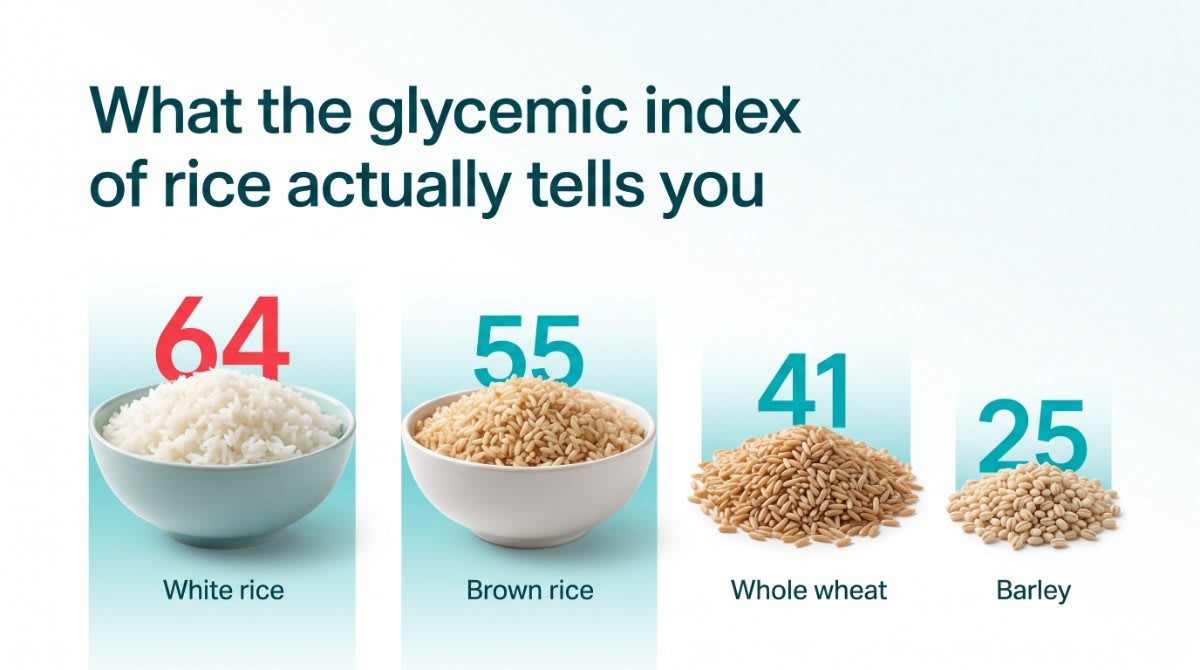
The glycemic index, or GI, is simply a measure of how fast a carbohydrate raises your blood sugar after you eat it. The Romanian review pulls together average GI figures from an earlier meta-analysis, and the gap between refined and whole grains is hard to miss:
White rice: 64
Brown rice: 55
Whole wheat: 41
Barley: 25
Whole grain foods, brown rice included, have been shown to improve insulin sensitivity and lower type 2 diabetes risk, largely because their fibre is still intact and slows down how quickly glucose from the meal reaches your bloodstream.
That said, brown rice isn't a free pass either. It's still a carbohydrate, and how much you serve yourself still matters. But set side by side, the white rice vs brown rice diabetes comparison isn't close. Brown rice wins on almost every measure that matters for blood sugar.
India's own low-GI rice varieties, long before the term existed
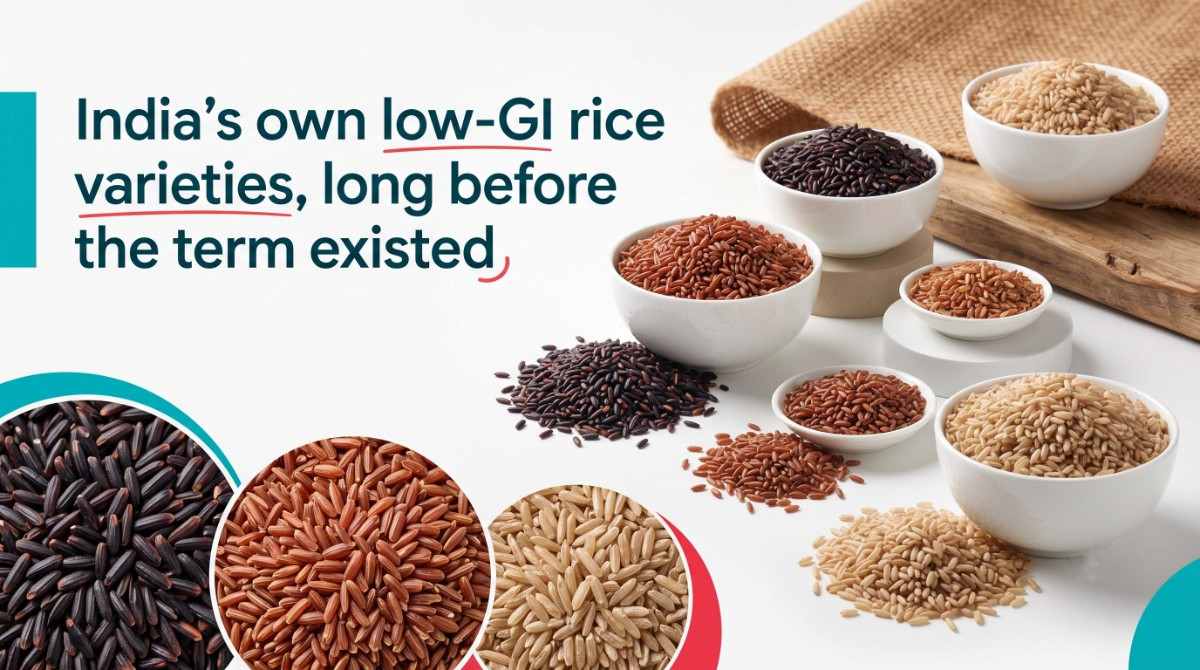
Before polished white rice became the everyday default, several regional Indian rice varieties were grown specifically for their medicinal value, not just their yield or taste. Some of them have since been studied directly for their effect on blood sugar, with genuinely interesting results.
1. Kavuni rice, Tamil Nadu
This black rice has been used since roughly 400 BC to treat gastritis, peptic ulcers, and blood sugar problems. When researchers compared it against two commonly eaten white rice varieties, CO50 and IR64, they found Kavuni rice could inhibit alpha-amylase and alpha-glucosidase, two enzymes responsible for breaking carbohydrates down into sugar. That inhibition slows glucose absorption and softens the post-meal blood sugar rise.
2. Nijavara, also called Navara rice, Kerala
Used for close to 2,500 years in Ayurvedic Panchakarma treatments, dehusked Navara rice was found to carry noticeably higher protein, mineral, and fibre content than common cultivars like Jyothi and IR64.
3. Rajamudi rice, Karnataka
A red variety with meaningfully more dietary fibre than polished white rice, plus antioxidants and zinc. Its lower glycemic value has made it a traditional go-to for diabetes management in the region.
4. Mappillai Samba, Tamil Nadu
Rich in flavonoids and anthocyanins, this rice has been shown to slow down how quickly glucose enters the blood, making it a better fit for a diabetic plate than ordinary white rice.
5. Kattu Yanam and Kichili Samba, Tamil Nadu
Both unpolished red varieties tied to lower blood glucose readings, with the extra fibre also supporting better digestion overall.
Most of these aren't sitting on supermarket shelves yet, since they're still grown in small, regional pockets. But their existence is a useful reminder that rice was never meant to be one uniform food. Some of these varieties were bred with exactly this problem in mind, generations before anyone had a name for glycemic index.
Could it be something other than the starch?
Interestingly, the research doesn't stop at fibre and GI. One theory raised in the same review points to arsenic content in rice as a separate contributing factor to diabetes risk. Higher inorganic arsenic exposure has been linked in other studies to insulin resistance and impaired insulin secretion. This doesn't change the practical advice, fibre-rich, lower GI rice is still the better everyday choice, but it's a fair reminder that the rice and diabetes relationship is still being actively studied, not something science has fully closed the book on.
What this actually means for your next meal
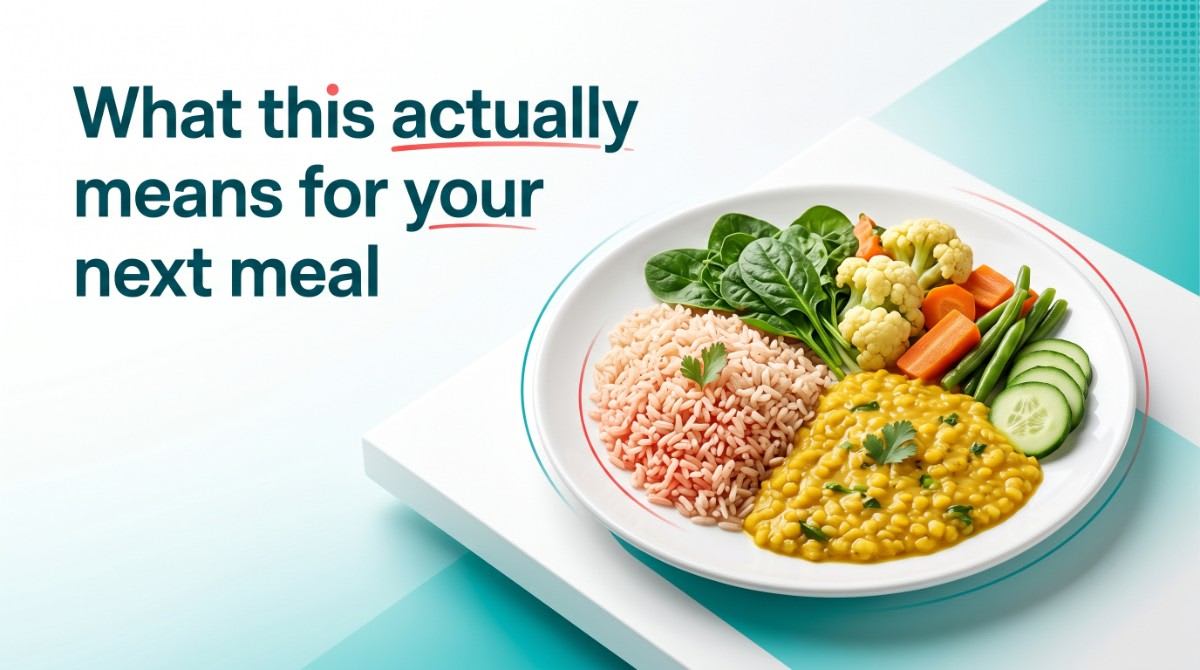
Rice doesn't need to disappear from your plate. The evidence supports smarter choices and better portions, not outright elimination.
Whole and unpolished varieties consistently beat polished white rice. Brown rice, red rice, and India's traditional varieties all carry more fibre and a gentler glycemic response.
Portion size still matters, no matter which rice you pick.
Pairing rice with protein, healthy fat, or fibre-rich vegetables slows digestion further and softens the blood sugar spike.
This is the same thinking behind how Metabulix approaches Indian diets. Nobody needs to give up rice, roti, or dal to bring their blood sugar under control. What actually helps is understanding how each of these behaves in your body, and building your plate around that understanding instead of around fear of a single food.
Conclusion
For years, people with diabetes have been told to avoid rice altogether. But the research tells a more balanced story. The real difference isn't whether you eat rice, it's the type of rice you choose, the portion you eat, and what you pair it with.
Whole and traditional Indian rice varieties generally provide more fibre, a lower glycemic response, and better nutritional value than polished white rice. While no single food can manage diabetes on its own, making informed choices about everyday staples like rice can have a meaningful impact on long-term blood sugar control.
The goal isn't to eliminate the foods you love but to understand how they affect your body and build meals that work in your favour. With the right guidance, it's possible to enjoy familiar Indian foods while keeping your blood sugar within a healthy range.
If you're unsure which type of rice best suits your health needs or want a personalised nutrition plan based on your blood sugar goals, the experts at Metabulix can help you make practical, evidence-based choices that fit your lifestyle and your plate.
Frequently asked questions
Q: Is white rice bad for diabetics?
It isn't automatically off the table, but it does raise blood sugar faster than whole grains because milling strips away most of its fibre. Research has tied higher white rice intake to greater diabetes risk, particularly in populations where it's eaten daily.
Q: Which rice has the lowest glycemic index?
Among the grains studied here, whole wheat and barley score lower than rice in general. Within rice itself, traditional Indian varieties like Kavuni and Rajamudi have shown notably lower glycemic values than polished white rice, thanks to their fibre content and, in some cases, their ability to slow down carbohydrate-digesting enzymes.
Q: Can diabetics eat rice daily?
Yes, in sensible portions and alongside protein or vegetables. The real concern was never rice itself; it's the pattern of large daily servings of high-GI, low-fibre polished rice with nothing to balance it.
Q: Are black or red rice varieties better than white rice?
Based on the available research, yes. Kavuni (black rice) and varieties like Rajamudi and Kattu Yanam (red rice) carry more fibre and antioxidants, and in some studies, actively slow down carbohydrate digestion.
Q: Does eating rice at night affect blood sugar differently than during the day?
The research reviewed here doesn't compare time-of-day effects specifically. What it does show clearly is that meal composition, the fibre, protein, and portion size around the rice have a far bigger, better-documented impact on your glucose response than the clock does.
Q: Wondering how rice fits into your own blood sugar goals?
Metabulix's doctor-led team builds personalised, Indian-diet-friendly plans that work with your food, not against it.