What if your body has already been warning you about diabetes and you've been ignoring every sign?
Feeling thirsty all the time?
Waking up repeatedly during the night?
Feeling exhausted even after getting enough sleep?
None of these sound like a medical emergency. That's exactly why diabetes is often diagnosed much later than it should be. Most people blame stress, poor sleep, or a busy lifestyle. Very few think their blood sugar could be the real reason.
Diabetes develops quietly. Long before complications appear, your body usually gives several warning signs. Recognising them early can help you seek treatment before high blood sugar starts affecting your eyes, kidneys, nerves, and heart.
Why Early Detection of Diabetes Matters?
According to the International Diabetes Federation (IDF), more than 589 million adults worldwide are living with diabetes, and millions more remain undiagnosed. Because these changes develop gradually, many people continue their normal routine without realising that high blood sugar has already started affecting their body.
Early diagnosis changes that. Identifying diabetes before complications develop gives you the opportunity to control blood sugar, protect vital organs, and lower the risk of long-term health problems.
Top Early Warning Signs of Diabetes
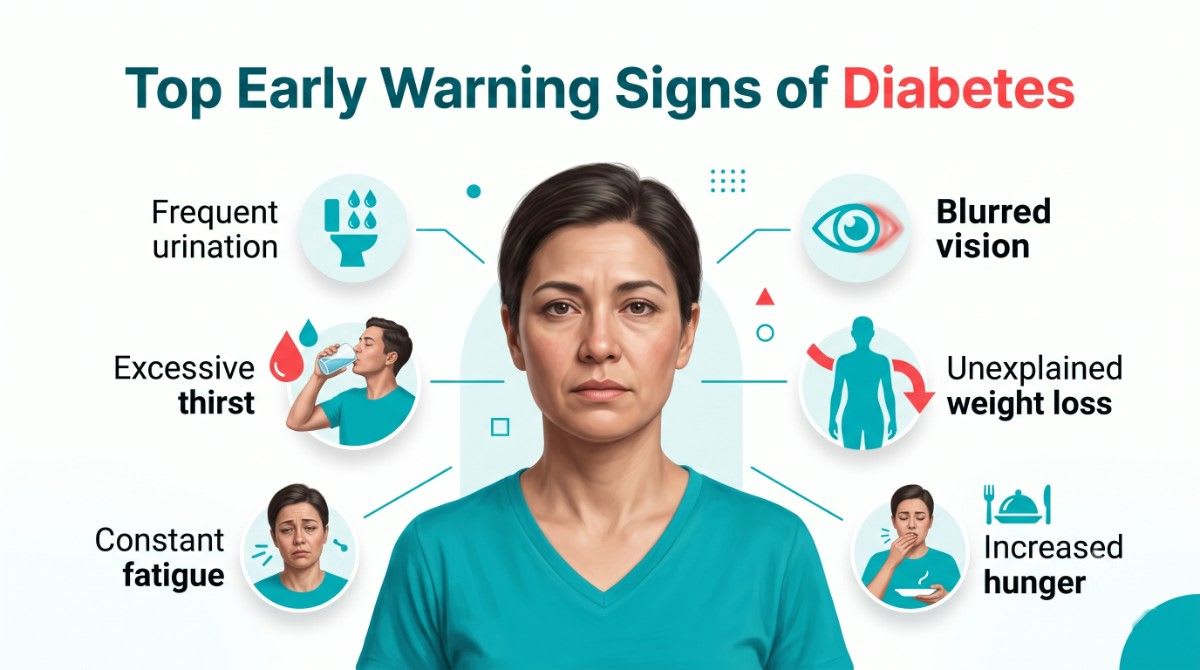
Not everyone experiences the same symptoms, and they don't always appear together. However, there are a few warning signs of diabetes that deserve attention, especially if more than one occurs at the same time.
1. Frequent Urination
Have you started planning your day around the nearest washroom?Type 1 diabetes
When blood sugar becomes too high, your kidneys can no longer reabsorb all the extra glucose. Instead, the excess sugar passes into your urine, pulling water along with it.
That's why you suddenly find yourself visiting the bathroom more often, especially at night. If this change appears alongside excessive thirst or fatigue, it's one of the most common early signs of diabetes. Constant thirst that continues for several days, especially when paired with frequent urination, shouldn't be ignored.
2. Excessive Thirst
Have you ever finished an entire bottle of water only to feel thirsty again a few minutes later?
That isn't always because of the weather.
Excessive thirst usually develops because your body is losing more water than it should. As excess glucose leaves through the urine, it pulls water along with it, leading to dehydration. Your brain responds by making you feel thirsty so you replace the lost fluids. However, unless blood sugar levels improve, drinking more water alone won't stop the cycle.
3. Constant Fatigue That Doesn't Improve With Rest
Everyone feels tired after a busy week.
Diabetes-related fatigue feels different.
Imagine filling your car with fuel, but the fuel never reaches the engine.
That's essentially what's happening inside your body.
Glucose is your body's main source of energy, but without enough effective insulin, it can't enter the cells where it's needed. Even though there's plenty of sugar in the bloodstream, your muscles and organs are left without enough fuel to function efficiently.
Many people describe diabetes-related fatigue as feeling drained from the moment they wake up. Even after a full night's sleep, simple daily activities can feel unusually exhausting. If this tiredness persists without any obvious reason, it's worth getting your blood sugar checked.
4. Blurred Vision
Many people think diabetes affects eyesight only after several years.
In reality, blurry vision can appear much earlier.
High blood sugar changes the amount of fluid inside the lens of your eye. As the lens swells slightly, it becomes harder to focus properly. You may notice that reading becomes difficult, distant objects look slightly blurry, or your vision seems to change from one day to the next. Many people assume they simply need a new pair of glasses, when in reality fluctuating blood sugar may be affecting the eye's lens.
The good news is that this type of blurred vision often improves once blood sugar levels return to a healthy range.However, repeated episodes of high blood sugar can eventually begin damaging the delicate blood vessels inside the retina.
5. Unexplained Weight Loss
Unexplained weight loss is one of the more surprising signs of diabetes because it often happens even when you're eating normally.
When your cells can't use glucose properly for energy, the body starts breaking down stored fat and muscle instead. This leads to gradual, unexplained weight loss even if you're eating normally or feeling hungrier than usual.
This symptom is more commonly seen in Type 1 diabetes but can also occur in people with undiagnosed Type 2 diabetes.
6. Feeling Hungry All the Time
This happens because although glucose is present in your bloodstream, it isn't reaching your cells efficiently. Your brain interprets this as an energy shortage and keeps asking for more food.
Feeling hungry all the time can also be linked to high blood sugar. Even after eating, your cells may still struggle to absorb glucose because insulin isn't working effectively. As a result, your brain continues sending hunger signals, making you feel hungry again soon after a meal.
Symptoms That Are Often Missed
Not every early sign of diabetes is obvious.
In fact, some of the most important symptoms are the ones people rarely connect with blood sugar. They are often mistaken for minor skin problems, ageing, vitamin deficiencies, or simply a hectic lifestyle.
Knowing these lesser-known signs can help you identify diabetes before it progresses.
Cuts That Heal Slowly or Frequent Infections

Have you noticed that a small cut on your finger or a blister on your foot seems to linger for weeks?
Healing is a complex process that depends on healthy blood circulation, oxygen, nutrients, and an efficient immune system. High blood sugar interferes with all of these.
When glucose levels remain elevated, blood vessels become less efficient at delivering oxygen and nutrients to injured tissues. At the same time, white blood cells, which help fight infection, don't work as effectively.
As a result, even minor injuries may:
Heal more slowly than usual
Become infected easily
Leave scars that take longer to fade
While slow healing doesn't automatically mean you have diabetes, it's an important symptom to pay attention to, especially if it's accompanied by other warning signs of diabetes.
The same reason also makes infections more common. High blood sugar weakens your immune response and creates an environment where bacteria and fungi can grow more easily. If you frequently experience urinary tract infections, skin infections, gum infections, or recurring yeast infections, it's worth discussing diabetes screening with your doctor.
Dark Patches of Skin
One symptom that surprises many people is the appearance of dark, velvety patches of skin around the neck, underarms, elbows, or groin.
This condition is called acanthosis nigricans.
It develops because high insulin levels stimulate skin cells to grow and produce more pigment. Rather than being dirt or poor hygiene, these patches are often a visible sign of insulin resistance, which commonly develops before type 2 diabetes. Doctors often recognise this as one of the earliest visible signs of insulin resistance, sometimes appearing years before Type 2 diabetes is diagnosed.
Many people try skin-lightening creams without realising the root cause lies inside the body.
If you've noticed these changes, especially alongside weight gain or a family history of diabetes, speak to a healthcare professional.
Tingling or Numbness in the Hands and Feet
Diabetes is well known for causing nerve damage, but many people don't realise that mild nerve symptoms can begin much earlier than expected. You don't need to experience every symptom on this list before getting tested. If you've noticed two or more of these signs, especially if you have a family history of diabetes, are overweight, have PCOS, or previously had gestational diabetes, it's a good idea to speak with your healthcare provider. Early testing can identify both diabetes and prediabetes before complications develop.
When Should You Get Tested?
One symptom alone doesn't necessarily mean you have diabetes. But if several of these signs appear together, your body may be telling you it's time to investigate further.
You should consider getting tested if you:
Feel unusually thirsty most days
Urinate more frequently than before, especially at night
Experience unexplained fatigue for several weeks
Notice blurred vision that comes and goes
Lose weight without trying
Have repeated infections or slow-healing wounds
Have a family history of diabetes
Are overweight or physically inactive
Have PCOS or a history of gestational diabetes
Early testing doesn't just help diagnose diabetes. It can also identify prediabetes, giving you the opportunity to make changes before diabetes develops.
How Is Diabetes Diagnosed?
If your doctor suspects diabetes, they may recommend one or more of the following tests:
Test | Purpose |
Fasting Blood Sugar | Measures blood sugar after fasting for at least 8 hours |
HbA1c | Shows your average blood sugar over the previous 2 to 3 months |
Oral Glucose Tolerance Test (OGTT) | Evaluates how your body processes glucose and is commonly used during pregnancy |
Can You Check for Diabetes at Home?
A home glucometer is useful for monitoring blood sugar, but it cannot diagnose diabetes on its own. If your readings remain consistently high or your symptoms continue, consult your healthcare provider for laboratory tests such as HbA1c or fasting blood sugar.
Conclusion
Your body often whispers before it starts to shout.
Feeling thirsty all the time, waking up repeatedly to use the bathroom, struggling with constant fatigue, or noticing blurred vision may seem like everyday problems. But together, they can be the early signs of diabetes that shouldn't be ignored.
For more practical guidance on diabetes symptoms, blood sugar management, and metabolic health, explore our diabetes and wellness articles
The sooner diabetes is identified, the better your chances of preventing serious complications. Whether it's through healthier eating habits, regular physical activity, or timely medical treatment, early action can make a significant difference to your long-term health.
At Metabulix, we believe the best diabetes treatment starts before complications begin. Our experts create personalised nutrition and lifestyle plans tailored to your health goals and Indian dietary habits, helping you manage blood sugar with practical, sustainable changes. If you've noticed any of these symptoms, getting evaluated early could be one of the most important decisions you make for your long-term health.
Frequently Asked Questions
Q: What is usually the first sign of diabetes?
One of the earliest signs is often frequent urination, followed closely by excessive thirst and persistent fatigue. However, symptoms vary from person to person, and some individuals may not notice any signs until blood sugar levels become significantly elevated.
Q: How can I check if I have diabetes at home?
A home glucometer can help you measure your blood sugar, but it cannot confirm a diagnosis on its own. If your readings are consistently high or you're experiencing symptoms, visit a healthcare provider for tests such as fasting blood sugar or HbA1c.
Q: Can diabetes symptoms appear suddenly?
Yes. In Type 1 diabetes, symptoms often develop rapidly over days or weeks. In Type 2 diabetes, they usually appear gradually and may go unnoticed for months or even years.
Q: What does early diabetes fatigue feel like?
Many people describe it as feeling physically and mentally drained even after getting enough sleep. Since glucose isn't reaching the body's cells efficiently, the body struggles to produce the energy it needs for daily activities.
Q: When should I see a doctor for diabetes symptoms?
You should seek medical advice if you experience persistent excessive thirst, frequent urination, unexplained weight loss, blurred vision, constant fatigue, or recurring infections. Early diagnosis can help prevent complications and improve long-term health outcomes.