Nearly 1 in 10 people worldwide live with diabetes, and the vast majority have type 2. Yet a lot of people find out almost by accident, during a routine blood test, because this form of diabetes tends to build up quietly over years rather than announcing itself all at once.
That slow build-up is actually good news in one way. Unlike type 1 diabetes, type 2 responds strongly to the choices you make every day, which means there's real room to manage it and, in many cases, push it back into a healthy range. This guide walks through what type 2 diabetes actually is, why it happens, and what managing it really looks like in day-to-day life.
What Is Type 2 Diabetes?
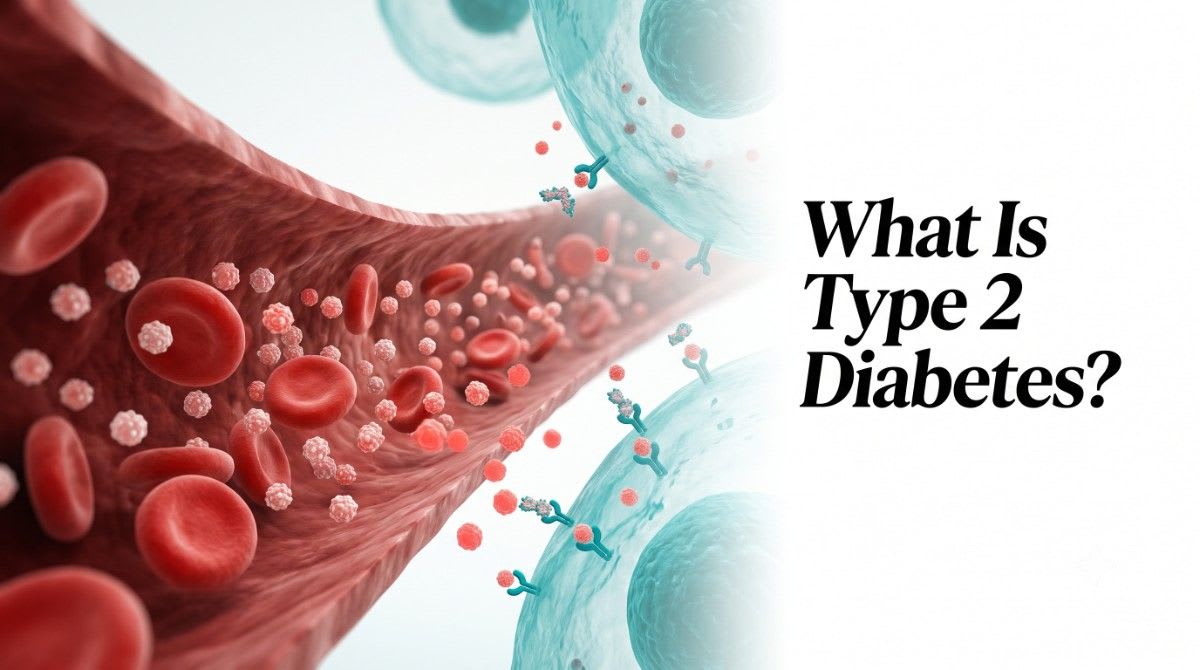
Type 2 diabetes happens when your body stops using insulin properly or eventually can't produce enough of it to keep up. Insulin is the hormone that helps move glucose, the sugar from the food you eat, out of your bloodstream and into your cells for energy.
In type 2 diabetes, your cells stop responding to insulin the way they should. This is called insulin resistance. Your pancreas tries to compensate by producing more insulin, and for a while, it manages to keep blood sugar in check. Over time though, the pancreas can't keep pace, and glucose starts piling up in the blood instead of getting used.
This is the most common form of diabetes by far, making up around 90 to 95 percent of all diagnosed cases. It's traditionally been seen in adults over 45, but that's shifting. More younger adults, and even teenagers, are being diagnosed now, largely tied to changes in activity levels and diet.
What Causes Type 2 Diabetes? (Insulin Resistance Explained)
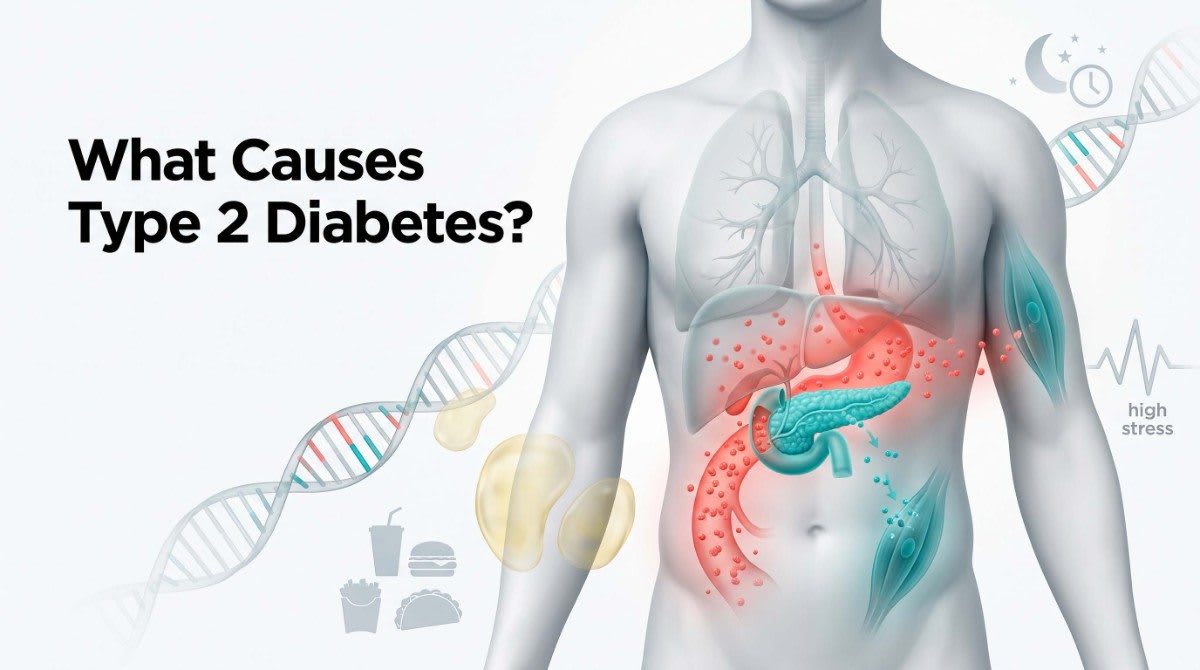
At its core, type 2 diabetes comes down to insulin resistance, but what causes that resistance is rarely just one thing. It's usually a mix of factors working together.
Genetics plays a bigger role than most people expect. If one parent has type 2 diabetes, your own lifetime risk sits around 40 percent. If both parents have it, that risk climbs even higher. Researchers have linked well over a hundred gene variations to diabetes risk, some raising it directly, others by making weight gain more likely in the first place.
Lifestyle factors matter just as much, if not more, for most people. Carrying excess weight, especially around the belly, sitting for long stretches without moving, and eating a lot of processed, high-carb food all push cells toward becoming insulin resistant. Poor sleep and chronic stress quietly raise blood sugar too, and hormonal conditions like an underactive thyroid or PCOS can tip the scales further. None of these factors work in isolation. They tend to stack on top of each other, which is part of why type 2 diabetes can feel like it "just happened" even when several risk factors were quietly building for years.
Common Symptoms of Type 2 Diabetes
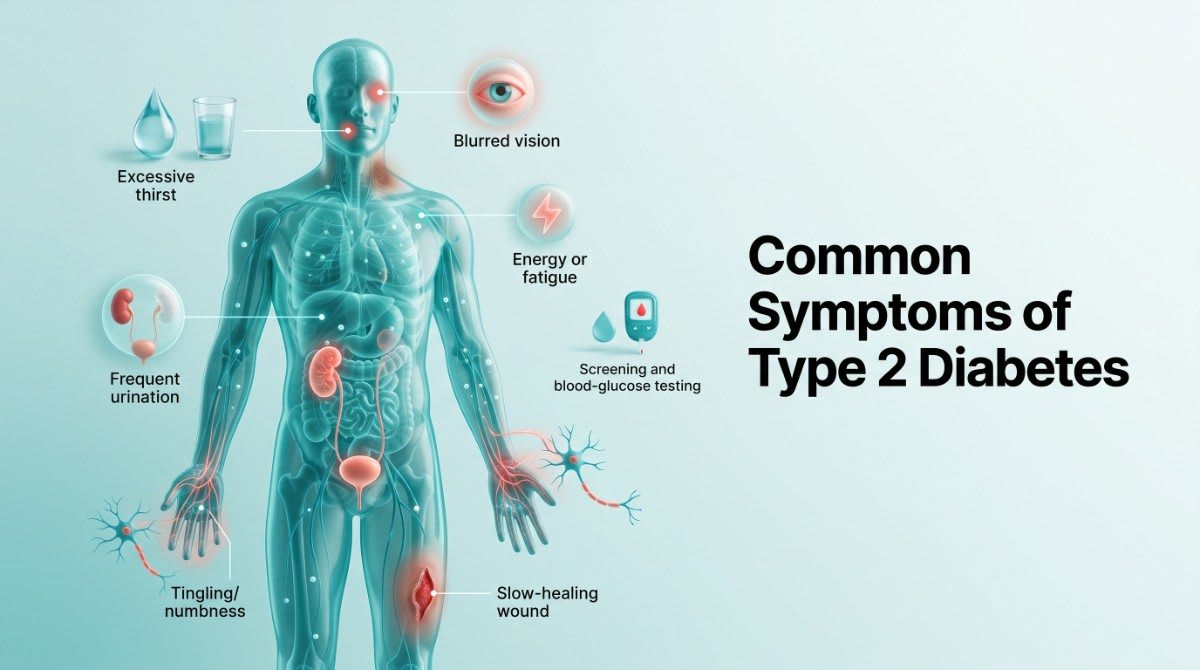
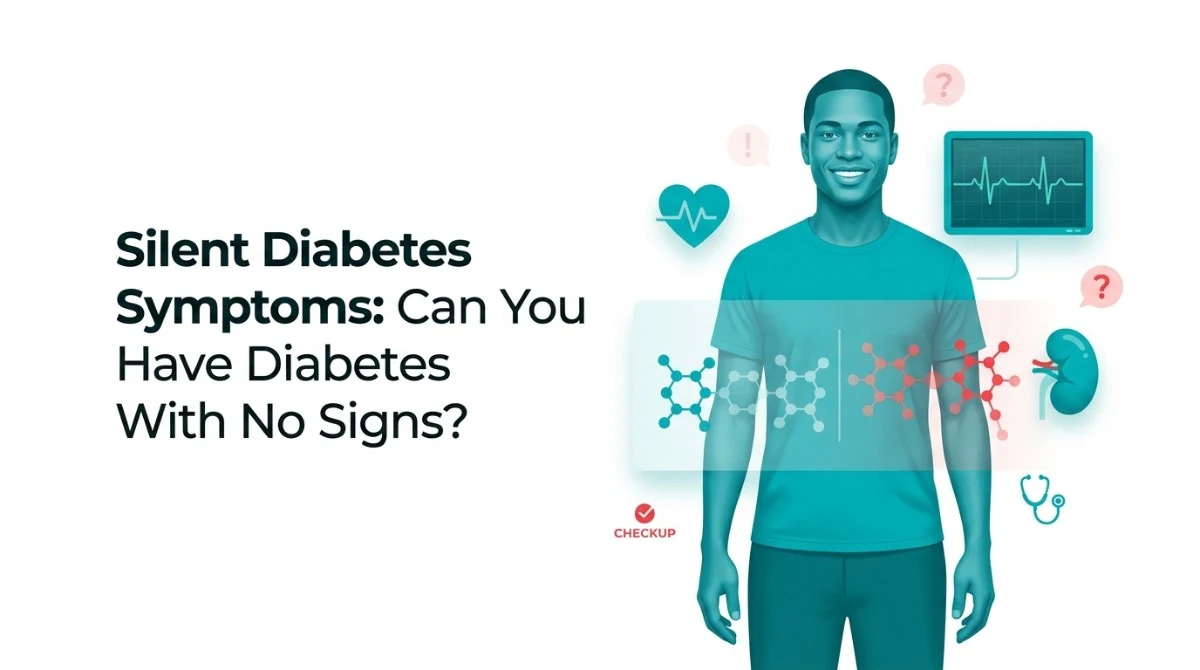
Symptoms of type 2 diabetes are notorious for being easy to miss. They develop gradually, and many people live with elevated blood sugar for years without realising it.
When symptoms do show up, they typically include:
- Feeling thirstier than usual, even after drinking water
- Urinating more frequently than normal
- Persistent fatigue that doesn't lift with rest
- Blurred vision
- Cuts or wounds that seem to take longer to heal
- Tingling or numbness in the hands or feet
Patches of darkened skin, often around the neck or armpits
Because these signs creep in slowly, regular screening matters more here than with type 1 diabetes. If you have risk factors like a family history, excess weight, or high blood pressure, get your blood sugar checked periodically even without obvious symptoms.
Diagnosis and Blood Sugar Targets
Doctors rely on a few standard blood tests to confirm type 2 diabetes. The fasting plasma glucose test checks your levels after an overnight fast, and a reading of 126 mg/dL or higher points to diabetes. The random plasma glucose test doesn't require fasting, and a result of 200 mg/dL or above is diagnostic.
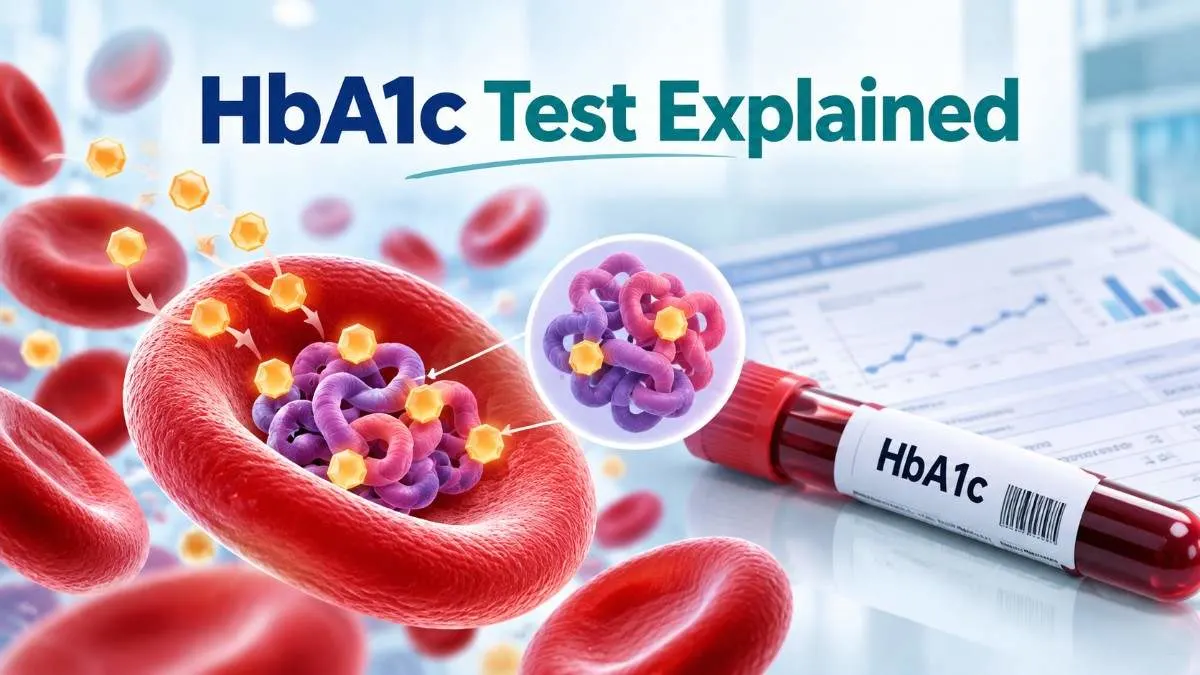
The A1C test is often the most useful one, since it reflects your average blood sugar over the past two to three months rather than a single snapshot. A result of 6.5 percent or higher indicates diabetes, while readings between 5.7 and 6.4 percent usually mean prediabetes.
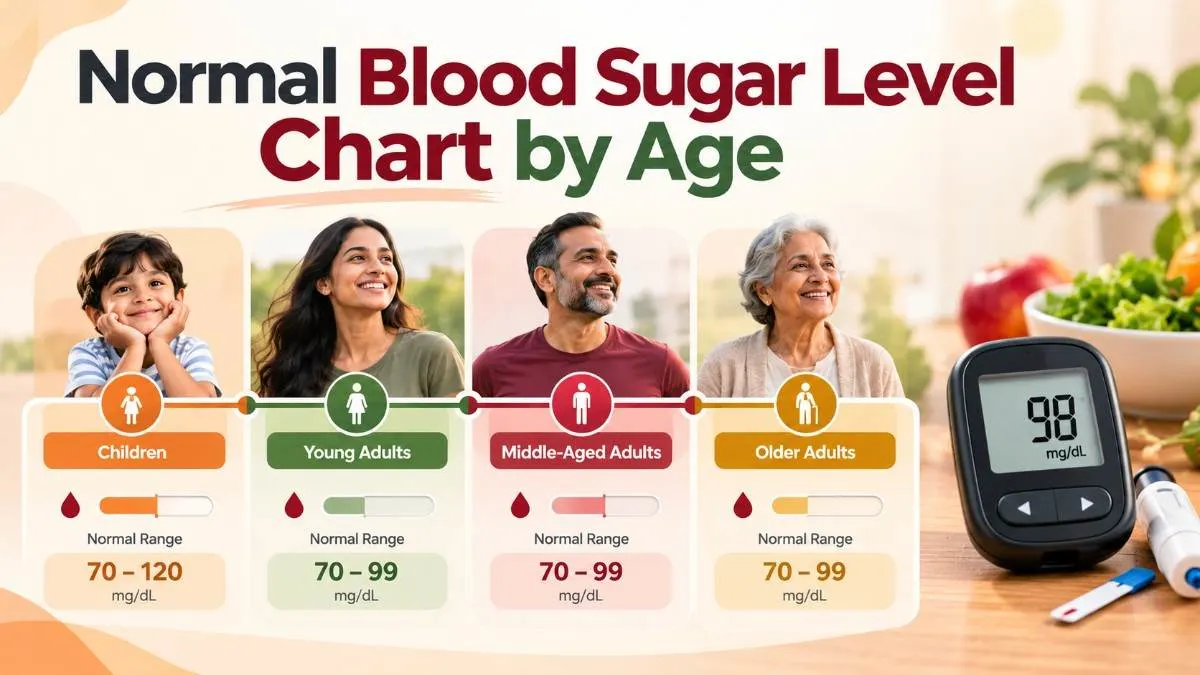
Once diagnosed, your care team sets personal blood sugar targets based on your age, other health conditions, and treatment plan. Healthy fasting levels generally sit between 70 and 99 mg/dL, and staying within your target range is what protects you from long-term complications.
Treatment Options: Medication, Diet & Lifestyle
Managing type 2 diabetes usually rests on three pillars working together: lifestyle changes, medication when needed, and consistent monitoring.
Diet plays an outsized role here. Meals built around non-starchy vegetables, lean protein, healthy fats, and complex carbohydrates tend to keep blood sugar steadier than heavily processed, high-sugar foods. This is exactly where things get tricky for a lot of people, especially in India, where staple meals often centre on rice and roti. The good news is you don't need to eliminate these foods altogether. Portion size, food pairing, and timing can make a real difference without turning every meal into a compromise.
Regular movement matters just as much. Around 150 minutes of moderate activity a week helps lower blood sugar directly and improves how your cells respond to insulin over time. You don't need an intense gym routine for this. Brisk walks, daily chores, or a consistent home workout can move the needle.
When lifestyle changes alone aren't enough, medication comes into the picture. Metformin is usually the first line of treatment, and depending on how the condition progresses, some people move on to other oral medications, injectable options like GLP-1 agonists, or insulin therapy.
Monitoring ties all of this together. Checking blood sugar regularly, through a glucose meter or continuous monitor, helps you and your care team see what's working and adjust the plan. Routine screenings for blood pressure, cholesterol, and eye and kidney health catch potential complications early, before they cause lasting damage.
This is where a place like Metabulix comes in. Instead of generic diet charts that ignore how Indian households actually eat, the focus is on building a plan around dal, roti, and rice, so managing blood sugar doesn't mean giving up the meals you grew up with.
Can Type 2 Diabetes Be Reversed?
This is one of the most common questions people ask, and the honest answer is it depends on what stage you're catching it at. Type 2 diabetes doesn't have a cure in the traditional sense, but for many people, especially those diagnosed early, sustained changes in diet, weight, and activity can bring blood sugar back into a normal range without ongoing medication.
This is often called remission rather than a cure, because the underlying tendency toward insulin resistance doesn't fully disappear. If old habits creep back in, blood sugar can climb again. Still, achieving remission, even temporarily, meaningfully lowers your risk of long-term complications.
The people who see the best results tend to be consistent rather than perfect. Losing even 7 to 10 percent of body weight, staying active, and keeping meals balanced over months, not days, is what actually moves the needle for most people.
Conclusion
Type 2 diabetes is common, but it's far from unmanageable. It develops through a mix of genetics and daily habits, which means daily habits also hold real power to shift the outcome. Catching it early, understanding your personal risk factors, and building a realistic plan around food and movement makes a measurable difference.
If you're newly diagnosed or trying to understand your risk, the earlier you act, the more options you have, including the possibility of remission.
FAQs
1. What is the main difference between type 1 and type 2 diabetes?
Type 1 is an autoimmune condition where the body produces little to no insulin. Type 2 is largely driven by insulin resistance, where the body still makes insulin but cells don't respond to it properly.
2. Can type 2 diabetes go away completely?
It can go into remission with sustained lifestyle changes, meaning blood sugar returns to normal without medication. The underlying risk remains, though, so ongoing healthy habits are needed to maintain it.
3. What foods should someone with type 2 diabetes avoid?
Processed foods, sugary drinks, and refined carbs are the main culprits. Staples like rice and roti don't need elimination, but portion size and pairing with protein or fibre matter.
4. Is type 2 diabetes hereditary?
Genetics plays a big role. One parent with type 2 diabetes raises your risk to around 40 percent, and two parents raise it further, though lifestyle factors still matter a great deal.
5. How often should blood sugar be checked?
This depends on your treatment plan. Some people check daily with a glucose meter or monitor, while others rely on periodic A1C testing every few months, as advised by their care team.