
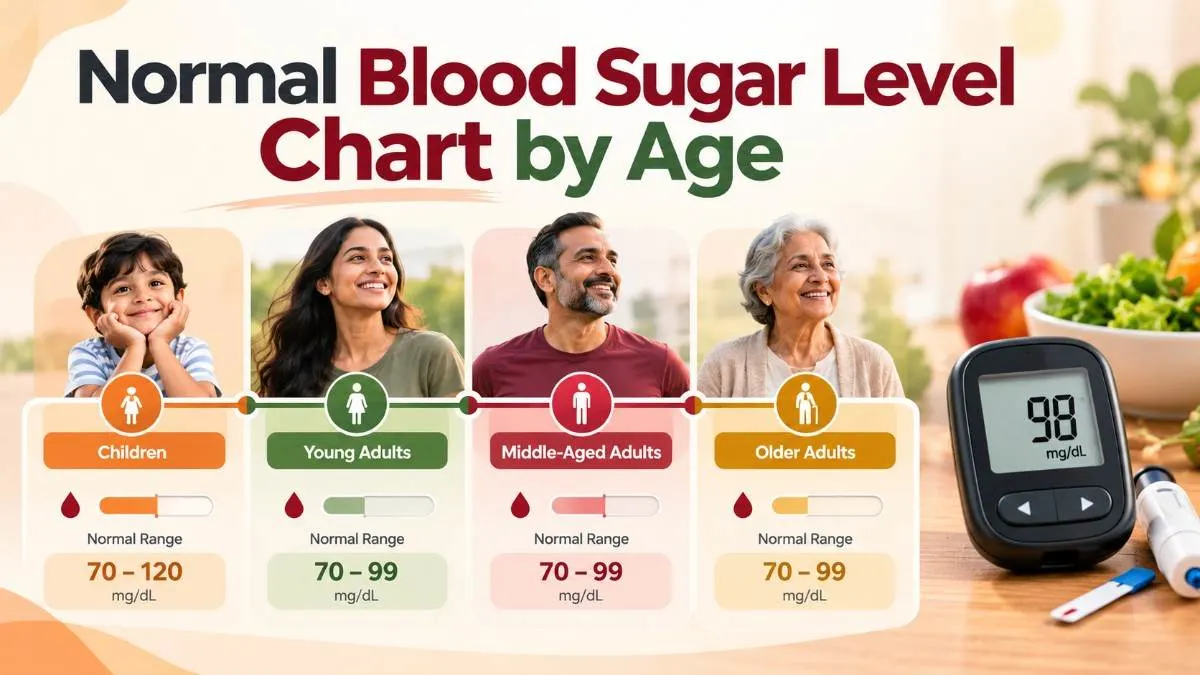
What should your blood sugar actually be at your age?
It's a simple question, but the answer is often presented too simply. You may find different charts online showing separate "normal" blood sugar levels for children, adults, and seniors. In reality, normal glucose ranges are not divided into completely different age-based categories for most nonpregnant people.
What matters is when your blood sugar is measured, whether you have diabetes, whether you are pregnant, and your individual health situation.
A fasting reading and a reading taken after a meal are not expected to be identical. A person without diabetes will also have different results from someone managing diagnosed diabetes, because diabetes treatment targets are personalised rather than designed around one universal number.
This guide explains the normal blood sugar level chart by age, how fasting and post-meal readings differ, what the numbers mean for people with diabetes, and when a blood sugar result should prompt medical advice.
Normal blood sugar ranges
For nonpregnant adults who do not have diabetes, commonly used diagnostic criteria classify fasting plasma glucose below 100 mg/dL as normal. A fasting level of 100 to 125 mg/dL falls in the prediabetes range, while 126 mg/dL or higher meets the laboratory criterion for diabetes, usually requiring confirmation when there is no unequivocal hyperglycaemia.
The same framework applies to the standard diagnostic tests rather than changing dramatically with age.
Test | Normal | Prediabetes | Diabetes |
Fasting plasma glucose | Below 100 mg/dL | 100 to 125 mg/dL | 126 mg/dL or higher |
2-hour glucose during a 75 g OGTT | Below 140 mg/dL | 140 to 199 mg/dL | 200 mg/dL or higher |
HbA1c | Below 5.7% | 5.7% to 6.4% | 6.5% or higher |
These numbers are used for diagnosing diabetes and prediabetes in nonpregnant people. A single abnormal result does not always establish a diagnosis, particularly when a person has no clear symptoms, so confirmatory testing may be required.
Blood sugar chart by age group
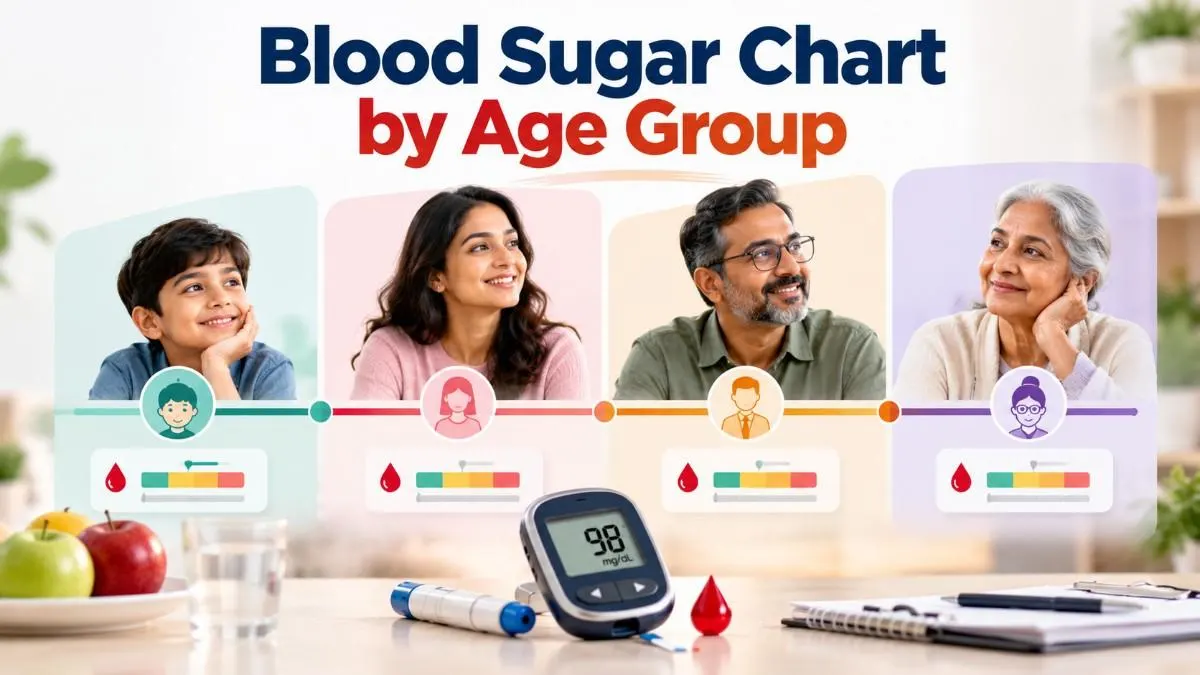
The phrase 'normal blood sugar by age' can be misleading because healthy glucose ranges are not normally assigned a completely different diagnostic cutoff for someone in their 20s versus someone in their 60s.
Children and Adolescents
Children without diabetes generally use the same standard diagnostic criteria for diabetes and prediabetes, although diabetes management targets can differ depending on age, type of diabetes, treatment, and individual health needs.
A child's blood sugar should therefore be interpreted by a pediatric healthcare professional rather than compared with an adult's home glucose reading without context.
Adults
For nonpregnant adults, fasting plasma glucose below 100 mg/dL is within the normal diagnostic range. The 2-hour value during a formal 75 g oral glucose tolerance test is considered normal when it is below 140 mg/dL.
Seniors
Older adults do not automatically have a higher "normal" blood sugar range simply because of age.
However, blood sugar targets for seniors with diabetes may be individualised. Age, other health conditions, life expectancy, risk of hypoglycemia, and treatment burden can all affect the safest target. Some older adults may therefore have less stringent glucose goals than younger, healthier adults.
This distinction is important. A diagnostic range tells you whether blood sugar falls into a normal, prediabetes, or diabetes category. A treatment target tells a person with diagnosed diabetes what glucose level they and their healthcare team are aiming for.
Fasting vs Post-meal blood sugar

Your glucose naturally changes after eating, so comparing a fasting reading directly with a post-meal reading can be misleading.
A fasting blood sugar is measured after at least eight hours without food or caloric drinks. It provides information about how the body is regulating glucose when you have not eaten recently.
A post-meal blood sugar is measured after eating. The timing matters because glucose usually rises after a meal and then gradually falls as insulin and other metabolic processes help move glucose into cells.
For people without diabetes, there is no single universal home-meter "normal post-meal" number that applies to every meal. The commonly cited 2-hour threshold below 140 mg/dL refers specifically to the 2-hour value during a standard 75 g oral glucose tolerance test used for diagnosis, not necessarily a target for every person's home post-meal reading.
Blood sugar targets for people with diabetes
The numbers used for diagnosis are different from the day-to-day targets used when managing diagnosed diabetes.
For many nonpregnant adults with diabetes, commonly used treatment goals include a blood glucose level of 80 to 130 mg/dL before meals and a peak postprandial capillary blood glucose level of less than 180 mg/dL, measured 1 to 2 hours after the beginning of a meal. A general A1C goal of below 7% is also appropriate for many adults, but these targets may be adjusted based on individual circumstances.
For someone with diabetes, the goal is therefore not necessarily to make every reading identical to the diagnostic "normal" range. Treatment is about achieving glucose levels that are safe and appropriate for the individual while reducing the risk of both high and low blood sugar.
What is considered dangerously high blood sugar?

There is no single blood glucose level that defines an emergency in every person. Very high glucose requires prompt attention, especially when accompanied by vomiting, abdominal pain, dehydration, difficulty breathing, confusion, severe weakness, or altered consciousness.
People at risk of diabetic ketoacidosis (DKA) should check ketones when symptoms or precipitating factors are present, particularly when glucose is above 200 mg/dL. A glucose level ≥600 mg/dL, together with hyperosmolality and other laboratory findings, may indicate hyperglycaemic hyperosmolar state (HHS), a life-threatening emergency.
People using insulin or glucose-lowering medicines should also be aware that blood sugar can become dangerously low. The appropriate response depends on the person's treatment plan and clinical situation.
What is the ideal blood sugar range for seniors?
There is no single ideal number that applies to every older adult.
A healthy older person without diabetes and an older adult managing insulin-treated diabetes may have very different targets. Healthcare professionals consider factors such as other medical conditions, cognitive and functional health, risk of hypoglycemia, medications, and overall treatment goals when setting targets for older adults.
This is why older adults should not change diabetes medication or attempt to lower their glucose aggressively based on a generic online chart.
When should you get your blood sugar checked?
You do not need to wait for symptoms before getting tested.
In the current ADA recommendations, diabetes screening generally begins at age 35 for adults without specific earlier risk factors. Testing may be recommended earlier for people with overweight or obesity plus additional risk factors such as a family history of diabetes, hypertension, physical inactivity, PCOS, or other conditions associated with insulin resistance.
People with prediabetes should generally be tested at least annually, while individuals with a previous history of gestational diabetes need continued long-term screening.
For more practical information about blood sugar, diabetes, and metabolic health, explore our latest diabetes and metabolic health articles.
Conclusion
A normal blood sugar level chart by age can be useful, but only when the numbers are interpreted correctly.
Age alone does not determine what your blood sugar should be. The timing of the test, whether you have diabetes or prediabetes, pregnancy status, medications, and your overall health all matter.
At Metabulix, we take a personalised approach to metabolic health, helping you understand what your blood sugar numbers mean rather than treating every reading in isolation. Explore our personalised metabolic health programs to learn more about nutrition and lifestyle guidance that supports sustainable blood sugar management.
At Metabulix, we take a personalised approach to metabolic health, helping you understand what your blood sugar numbers mean rather than treating every reading in isolation. With evidence-based nutrition and lifestyle guidance, the goal is to build sustainable habits that support healthier blood sugar over time.
FAQs
1. What is a normal blood sugar level chart by age?
For most nonpregnant people, diagnostic glucose ranges are not divided into completely different normal ranges simply by age. Fasting glucose below 100 mg/dL and a 2-hour OGTT value below 140 mg/dL are commonly classified as normal. Individual treatment targets can differ, especially for older adults with diabetes.
2. What should blood sugar be 2 hours after eating?
For diagnosis, a 2-hour glucose value below 140 mg/dL during a standard 75 g oral glucose tolerance test is considered normal. For many adults with diagnosed diabetes, a common treatment target is a peak postprandial capillary blood glucose level of less than 180 mg/dL, measured 1 to 2 hours after the beginning of a meal. These are different measurements and should not be confused.
3. What is considered dangerously high blood sugar?
Very high glucose becomes particularly concerning when it is accompanied by symptoms such as severe thirst, frequent urination, vomiting, abdominal pain, confusion, weakness, or difficulty breathing. Urgent medical assessment may be needed depending on the glucose level and symptoms.
4. Does the normal blood sugar range differ for diabetics?
The diagnostic definition of normal glucose is different from a treatment target. People with diabetes generally have individualised targets, and many nonpregnant adults are advised to aim for 80 to 130 mg/dL before meals, a peak postprandial capillary blood glucose level of less than 180 mg/dL, measured 1 to 2 hours after the beginning of a meal, and an A1C target of below 7%, although targets vary by individual.
5. What is the ideal blood sugar range for seniors?
There is no single ideal range for all seniors. Glucose targets should be individualised according to overall health, other medical conditions, risk of hypoglycemia, medications, and life expectancy.